
Troubleshooting: What to do when you can’t see an IBCLC
Whether you can't afford to see an IBCLC, you want to try some other things before paying, or the IBCLC is unavailable, this comprehensive guide will take you through some steps you can take to troubleshoot common problems and find additional free support.
Disclaimer: This information is for general use only and is not a replacement for full lactation care.


Latching 101
These tips will help your baby to latch more deeply, reducing nipple pain and baby's fussiness.
Be in a COMFORTABLE position BEFORE latching baby. Any time you move after baby is latched, you risk changing the way your breast feels in baby's mouth and they may unlatch or slip off. Many parents find leaning back in a slouchy position allows gravity to take some of baby's weight.
Ensure that your baby's front is touching your body - especially their tummy and chest. This keeps baby very close to you, making it easier to latch and helping them to feel safe.
Try to have the tip of baby's nose touching your nipple. In this position, baby will be able to tip their head back to come up and over the nipple in a deeper latch. Don't be tempted to move your nipple or baby at the last minute! Although it looks counterintuitive, simply pushing baby forward as if onto the nipple will usually get a deep latch!
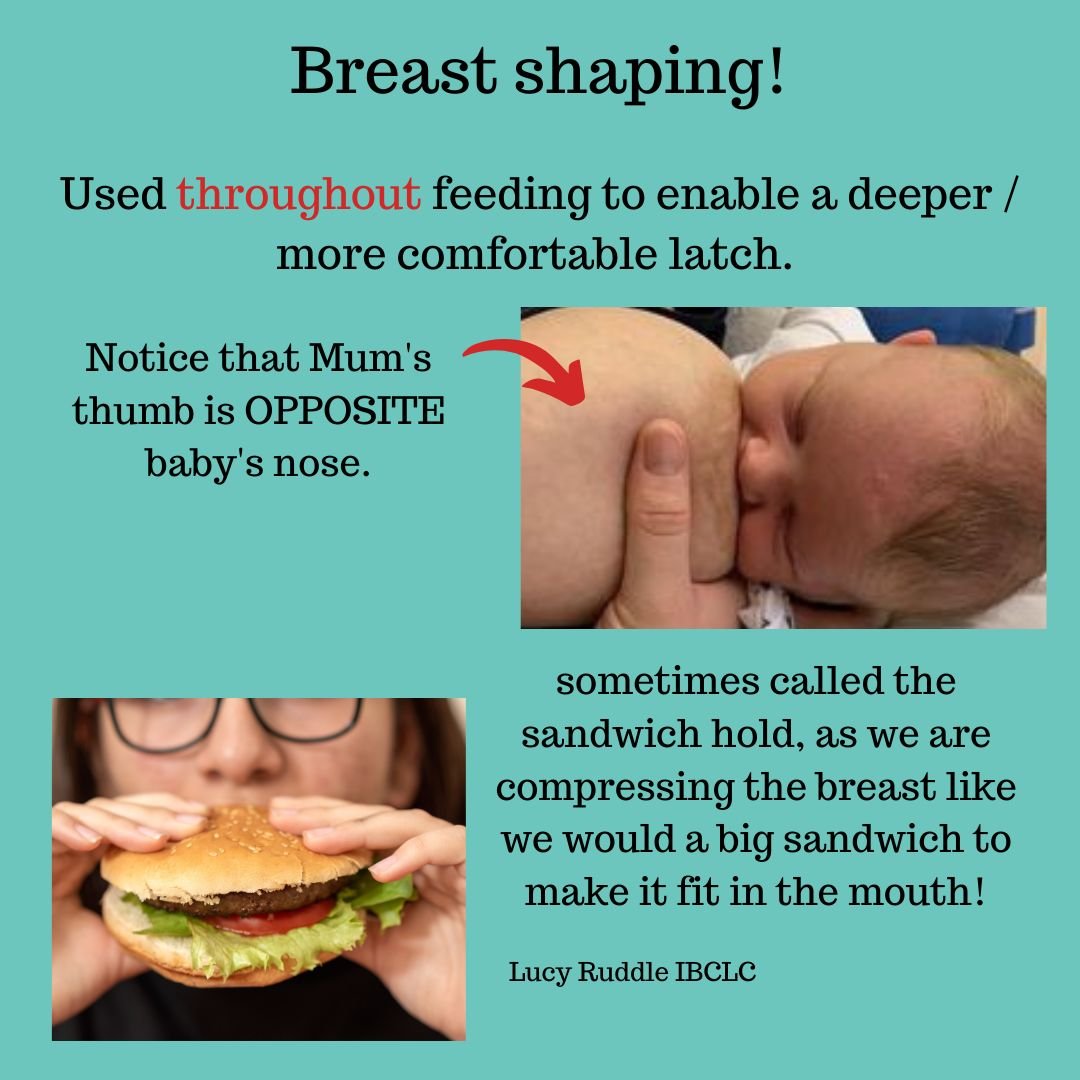
Breast Shaping
When we eat a burger we will squash it with our fingers to fit it in our mouths. Breast shaping is the same theory! Some people worry this can cause mastitis but there is no evidence that this is the case. If you are worried about mastitis with this technique, check out this article from Carol Smyth which should put your mind at ease.
The U hold is used in cradle and cross cradle positions. Scoop your hand underneath your breast tissue, so your thumb is on the outer side of your breast and your fingers are next to your chest. Squeeze firmly and latch baby. Do NOT let go once baby is latched! Doing this changes the shape of your breast and baby may slip. If you want to let go or relax the pressure, do so slowly so baby has time to adapt.
Tongue Tie Assessments
Signs that baby might need a tongue tie assessment:
Painful feeding despite working on latching.
Baby slips off the breast often
Fussy feeding
Slow weight gain
A tongue tie assessment includes the practitioner using their finger to learn how baby sucks. If this didn't happen, your baby has NOT had an oral assessment.
Osteopaths and Chiropractors
While there isn't a lot of clear evidence to support body work, this is because large, well designed studies haven't been carried out. However, there is some promising data, and a lot of reports from families that say seeing a cranial osteopath or a chiropractor can help breastfeeding.
One of the reasons for this may be because the cranial nerves in the base of the skull can be tight or sore after birth. These nerves connect to the tongue and face, and if they're uncomfortable, baby may struggle to breastfeed.
Always check that anyone to see to do body work on you baby is appropriately qualified. It's worth asking local friends who they recommend.
Useful Resources
Peer support groups and Breastfeeding cafes are great places for free, trained support. Your midwife can tell you about the local options.
This FREE guide is a brief introduction to latching, and covers how to identify a shallow latch, breast shaping techniques, and some simple tips for deepening a latch. Available in PDF format.


This extensive guide goes into depth to explain beyond the basics of latching. With photography throughout, you will be able to see real life examples of latch positioning to help you and baby find a comfortable latch, and have a positive breastfeeding experience. Available in PDF format.
This in-depth guide will help you to:
Identifying a shallow latch
Understand the benefits of breast shaping
Learn new techniques and holds
Improve latch for a deeper and less painful feed

This brief guide outlines the most common feeding challenges faced within the first few weeks of baby arriving. It offers advice over what is to be expected and when to seek further support, as well as some troubleshooting tips to help you on your journey.