Lasting impact: hegemony and formula in the media
Formula feels normal. Not just available... genuinely, culturally, unremarkably normal.
Some of you will disagree with me - especially if you’ve felt pressure to breastfeed. So, let me explain my position.
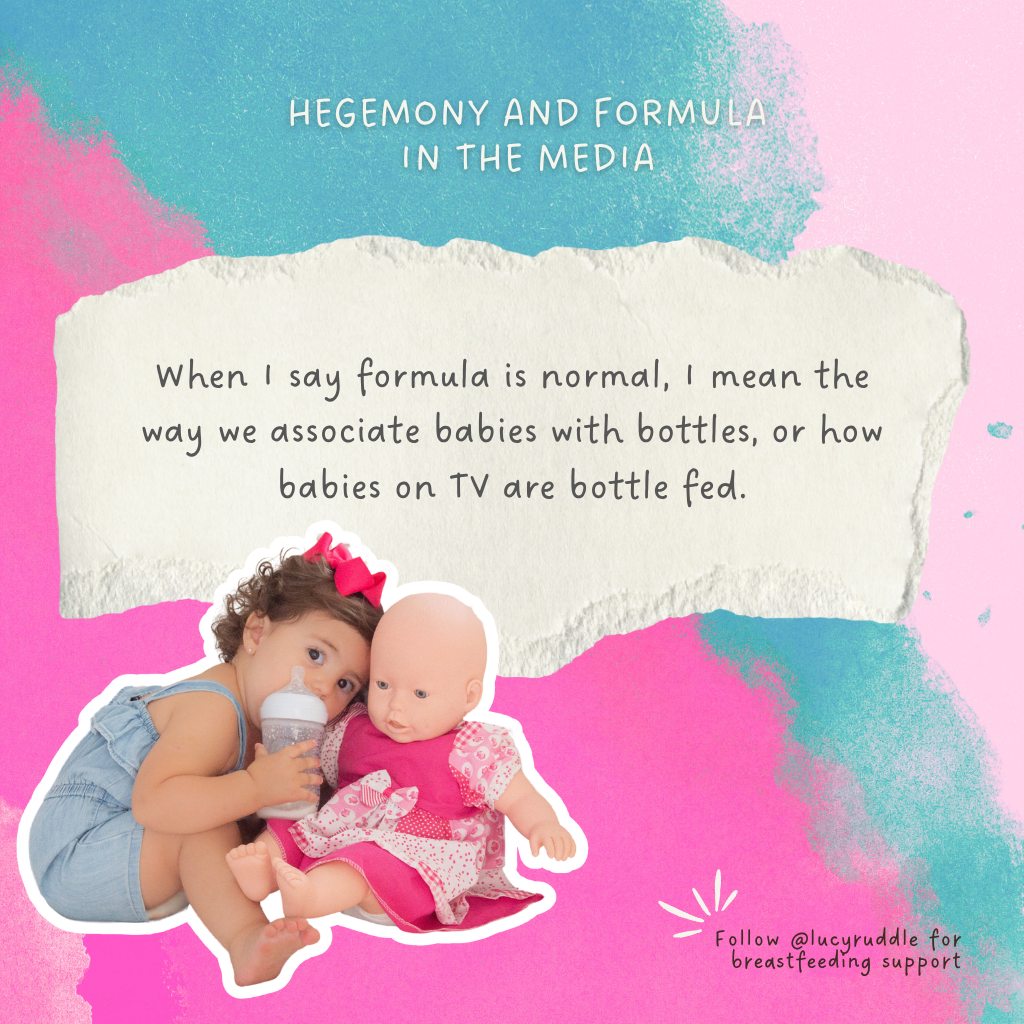
When I say formula is normal, I mean the way we associate babies with bottles, or how babies on TV are bottle fed.
I mean how there is an entire aisle in the supermarket dedicated to a product that is essentially the same, regardless of what colour the label is.
I mean social media influencers advertising it, people asking how much milk your baby takes, or when you’re going to stop breastfeeding.
I mean how if breastfeeding is challenging at all someone will inevitably tell you to stop and use formula instead.
I also mean the way breastfeeding is heavily promoted throughout pregnancy as the best option, but how that message often doesn’t come with meaningful help when breastfeeding is then difficult.
Because if breastfeeding was normal in our society, we would have the structures consistently in place to let it work.
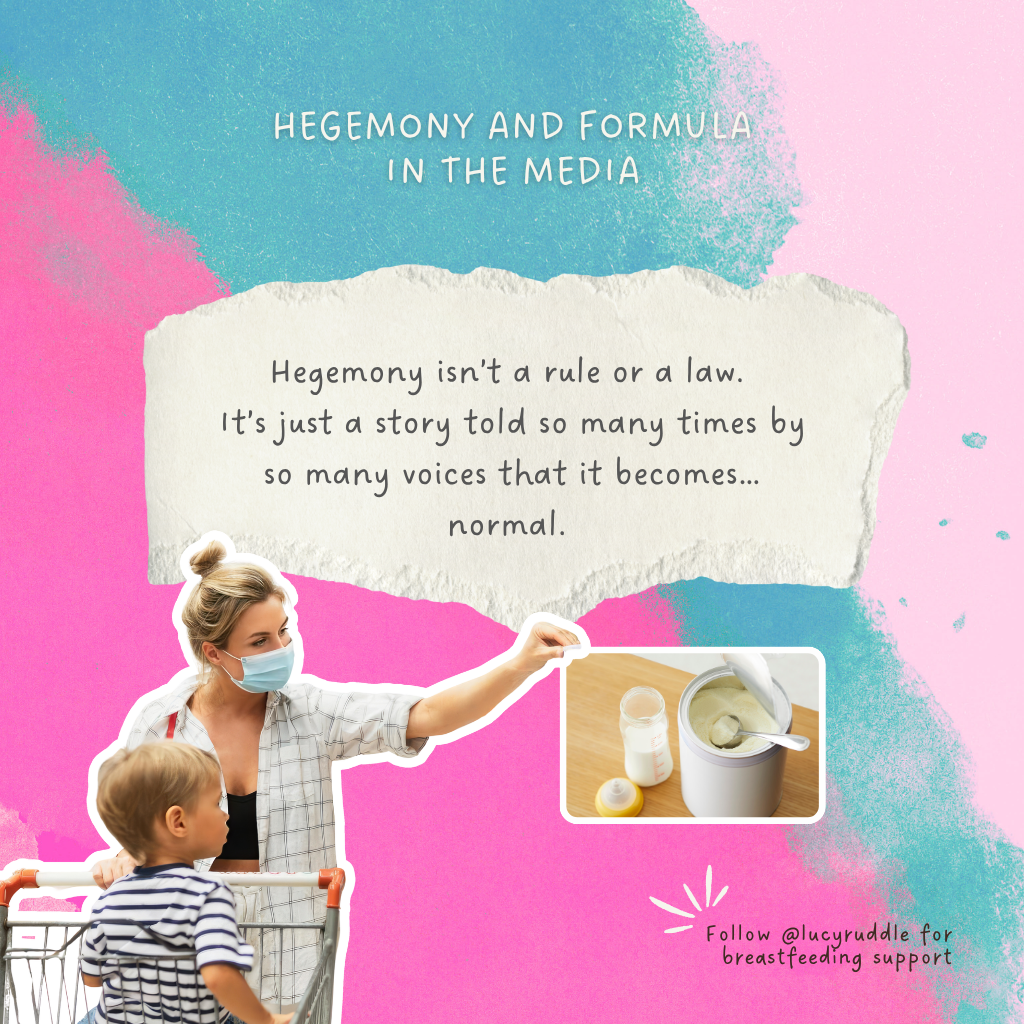
This is what Gramsci called hegemony. Hegemony isn’t a rule or a law. It’s just a story told so many times by so many voices that it becomes… normal.
Formula is in waiting rooms, parenting magazines, and the casual advice of people who love us and mean well. Breastfeeding - when it appears in narratives - is often framed as difficult, painful, demanding, or a lifestyle choice for a particular kind of parent.
Nobody had to enforce this idea - it’s just been a slow drip feed of images and messages for so long that we don’t really notice it anymore. That’s hegemony - the “common sense” or “norm” of the system we live in shaped by the stories we tell each other over and over again.
Who’s benefiting from the story that breastfeeding is difficult? That women’s bodies fail? Who has the money and the reach to sell us a product instead of addressing feeding challenges?
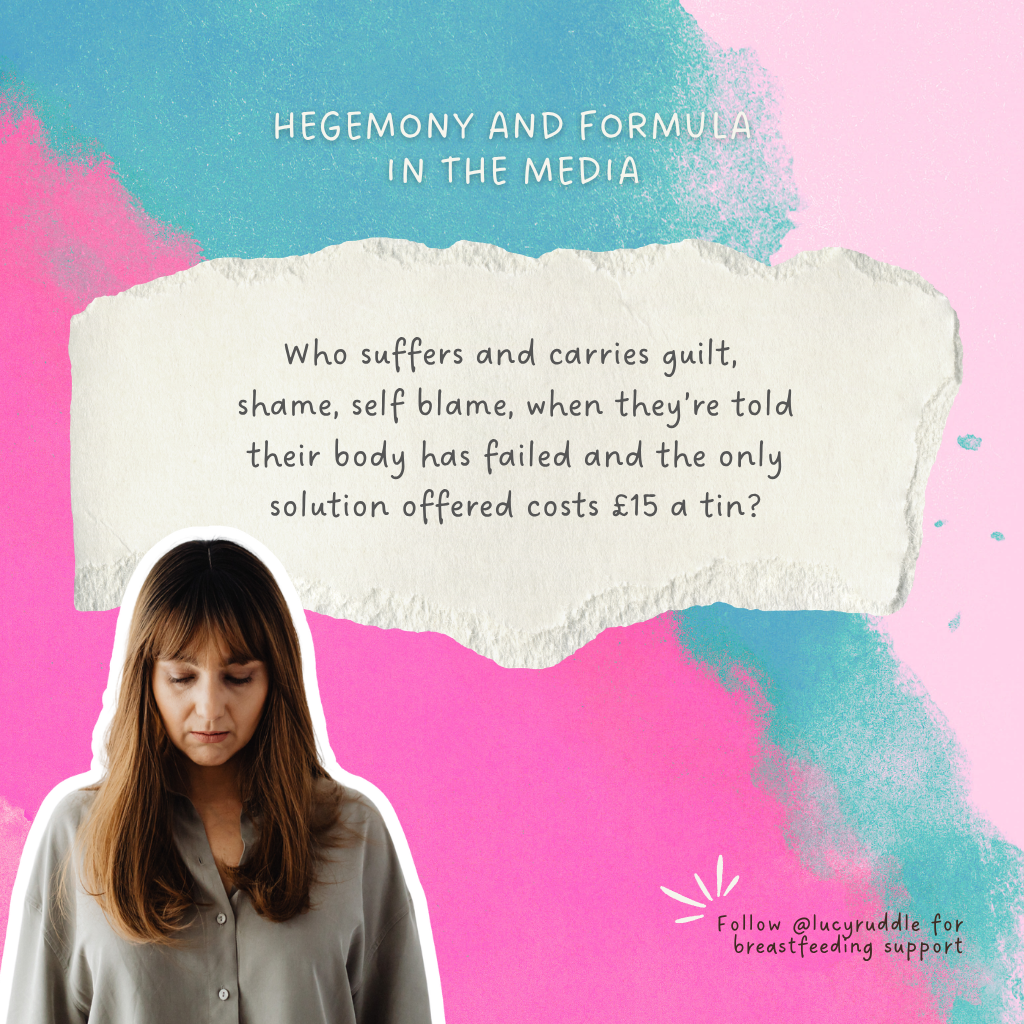
And, most importantly, who suffers and carries guilt, shame, self blame, when they’re told their body has failed and the only solution offered costs £15 a tin?